
How Does Grief Stop the Clocks?
Time, ritual, and belonging in the place between loss and love

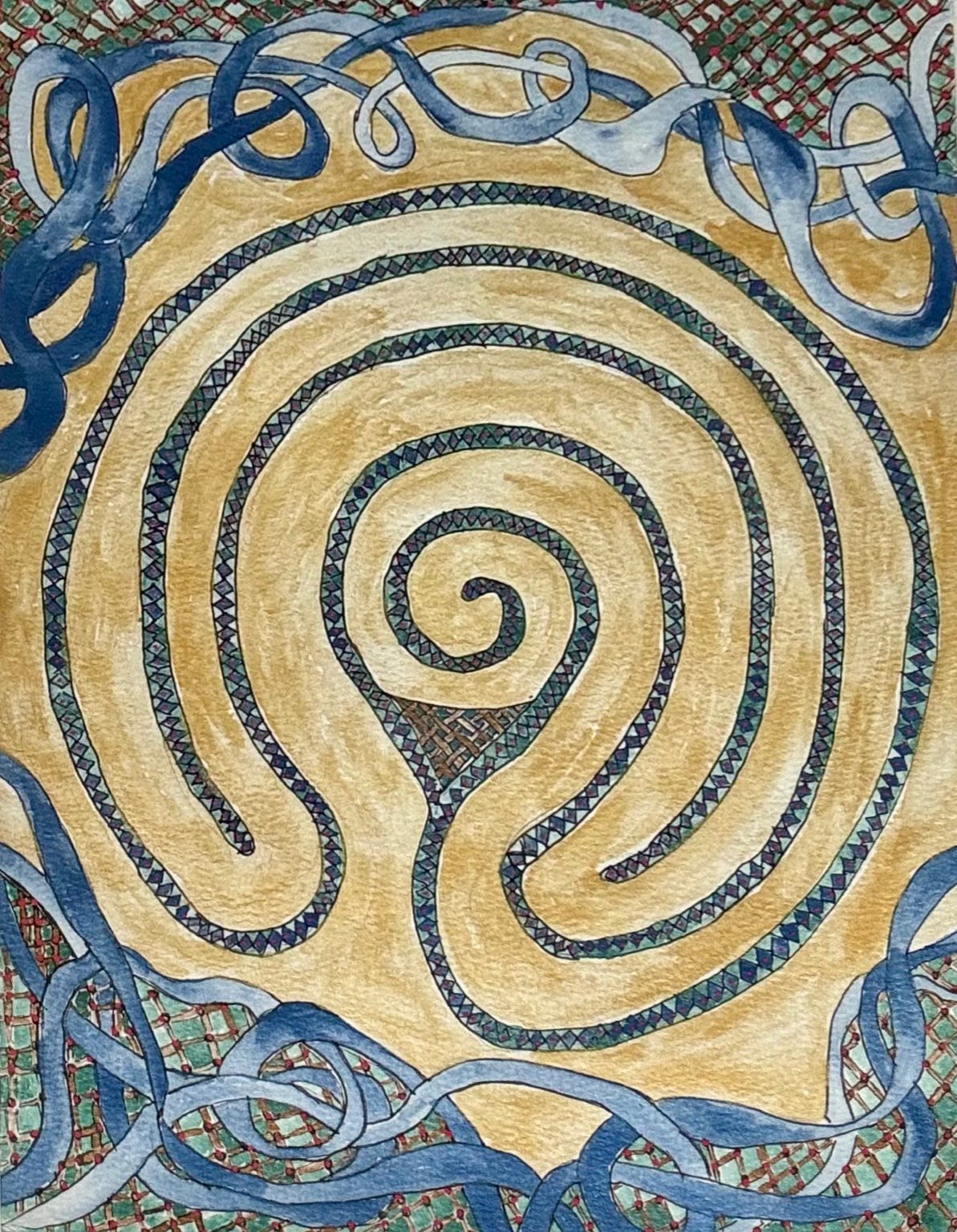
Grief fractures time.
When someone we love dies, the ordinary routines and community structures that hold us in the present seem to fall apart, leaving us suspended in a liminal space where past, present, and future no longer align. In that place between, belonging must be renegotiated: to the living world we can no longer fully inhabit, and to the dead whose presence does not disappear but changes form.
In the last month, I have been reminded that clocks do not measure grief. Since my mother-in-law was hospitalized in early December, I have known my time with her was finite. On January 1, 2026, she died.
The loss has overtaken my capacity to feel, and it’s as if I am floating through another person’s life: getting done what needs to be done but also watching myself from a distance. The loss doesn’t feel acute, but I also feel no joy. I feel numb and disconnected. And I have been unable to write until today. This is not the first death I’ve experienced, but I had forgotten how apropos the first line of W. H. Auden’s Funeral Blues is: Stop all the clocks, cut off the telephone…
Grief has moved me into the place between, where my feeling that Estelle is still with me is holding me in the past and impeding my ability to connect to a present in which she is gone. I am suspended in a loop: the sun rises and sets, the pages of the calendar turn, but in my head, that feels irrelevant. No particular place feels like home.
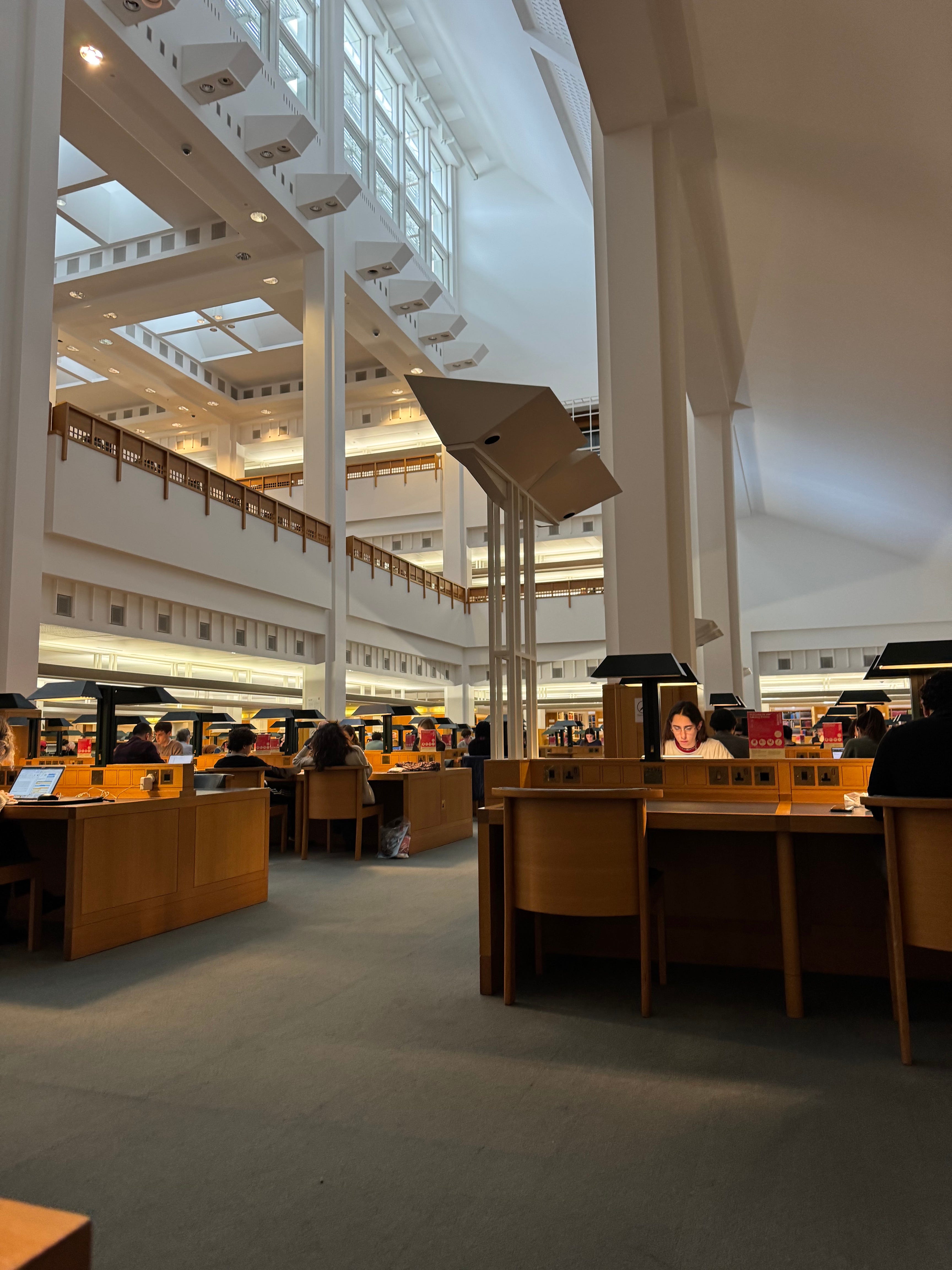
It’s frustrating to be unable to settle and feel present in the moment, and in an attempt to shake myself out of it, I’ve come to the library. Not so much to do research, since most of that is online, but to be in a place feels like a repository of linearity. The smell of old paper and the glow of desk lamps are sensory anchors, and the books document the chronological story of human existence. Unfortunately, while it’s a peaceful place to work, my disconnection persists.
What I’m experiencing lines up with research on the attachment model of grieving. During grief, dissonance exists between an external reality in which a loved one is no longer physically present and “an internal reality in which the deceased is longed for, called upon, and sensed as present”. Time seems suspended because these realities are in conflict.
The same theory suggests that rather than orderly stages of grief through which the bereaved move steadily toward accepting loss, the process instead evolves cyclically over time.
The social conventions of grieving, marked by funeral services, meal deliveries from caring friends, and floral arrangements, set a linear timeline for public mourning that is often out of sync with that cyclical process, intensifying the feeling of being “out of time.”
It is reassuring to know that what I am experiencing is normal because it feels quite strange. I have flown to the UK and to me London usually feels different than the US. But I’m unable to get out of my head enough to notice what makes this place unique. I’m biding time, only here physically. Right now, I could be anywhere, and it wouldn’t matter.
It’s disquieting to confirm that I cannot force my way back into my linear reality. I want to be able to fully experience where I am and what I am doing, and right now I that is not happening. My failure to feel connected in the library is further proof that I cannot avoid grappling with my loss.
In On the Wild Edge of Sorrow, Richard Weller suggests, “It is a holy thing to love what death can touch…. Grief is akin to praise; it is how the soul recounts the depth to which someone has touched our lives.”
Weller also suggests that the feelings of loss associated with illness are similar: we grieve what ill health has taken from us. That rings true for me, because my year of cancer treatment and recovery carried a similar out-of-time cadence—one that led to a radical reorientation of my life priorities. When I let go of the idea that my success was measured by my accumulated achievements over time, I was able to prioritize things I wanted that offered no external recognition or reward.
In the case of my illness, it took years before my internal and external realities re-aligned, and even now it is easy to let go of the tether connecting past, present, and future sequentially. Maybe that is why I fear this grieving process: I have been here before, and I know what a lonely place it can be. In letting go of external validation and embracing a more fluid concept of time and belonging, I turned away from a world organized around shared timelines and forward motion. In doing so, I ended up letting go of many of the people and places that once anchored my sense of belonging. It was the right thing for me, but it was not easy.
Based on that experience, I also know that, for me, this space can be transformational. During my illness, I felt connected to something infinite when I accepted the artificiality of linear time. I believe that somewhere in this sadness I will reconnect to that feeling and experiencing that will be a beautiful thing.
But I am not there yet.
Weller suggests that one way to move through grief is to use ritual as a container to hold loss. For me, the funeral will be the first such ritual. One of the scriptures that will be read comes from Paul’s letter to the Romans, chapter 8, ending with verse 39: “For I am convinced that neither death nor life, neither angels nor demons, neither the present nor the future, nor any powers, neither height nor depth, nor anything else in all creation, will be able to separate us from the love of God that is in Christ Jesus our Lord.”
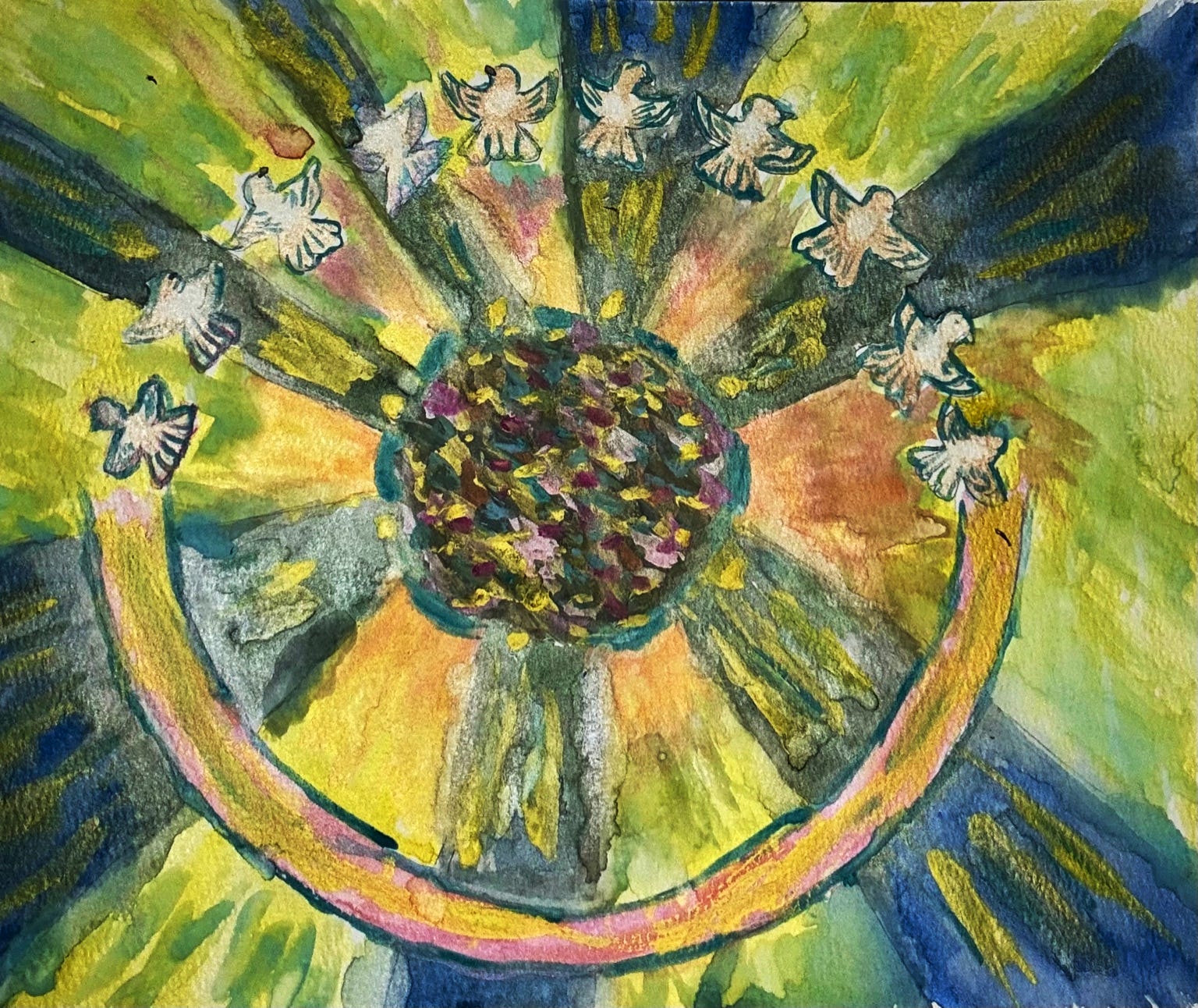
As a practicing Christian, I understand Christ to participate in divine eternity while also having entered historical time through incarnation. He dwells in the liminal space where chronological time does not exist.
He is both my companion in the out-of-time place grief has taken me and my guide toward recognizing the divine love offered through his existence. I believe it is through this love that we connect to the universe.
The ritual of hearing bible verses and hymns with a community collectively navigating the loss of Estelle will help me find my way forward. I know that for others who do not share this theological orientation, the funeral may feel performative. Their passage through grief will take a different path. But their presence will be meaningful to me because I know we all loved Estelle.
For now, I remain in the place where time has loosened its grip and belonging feels provisional. Grief will not allow me to return to the world as it was, nor has it carried me fully into what comes next. Instead, it has opened a space where love persists without a body, where ritual stands in for certainty, and where connection is no longer governed by clocks or calendars. I do not yet know how long I will remain here, only that this in-between is not empty. It holds memory and, for me, a presence that exists beyond linear time, steady enough to bear what I cannot yet carry forward on my own.
Thank you for this beautiful reflection on grieving. I'm sorry you're in this difficult place... and as you articulate so well here, it is the only place to be right now. Much resonance for all of us, as there is so much loss to grieve... 🙏🏼 Thank you for sharing.
This sentence—“I am suspended in a loop: the sun rises and sets, the pages of the calendar turn, but in my head, that feels irrelevant. No particular place feels like home.”—is excellent.
I’m a therapist writing a book on breakups and just subscribed. Appreciate this work.