
Learning to See Alligators
How certain places encourage us to confront our shadows

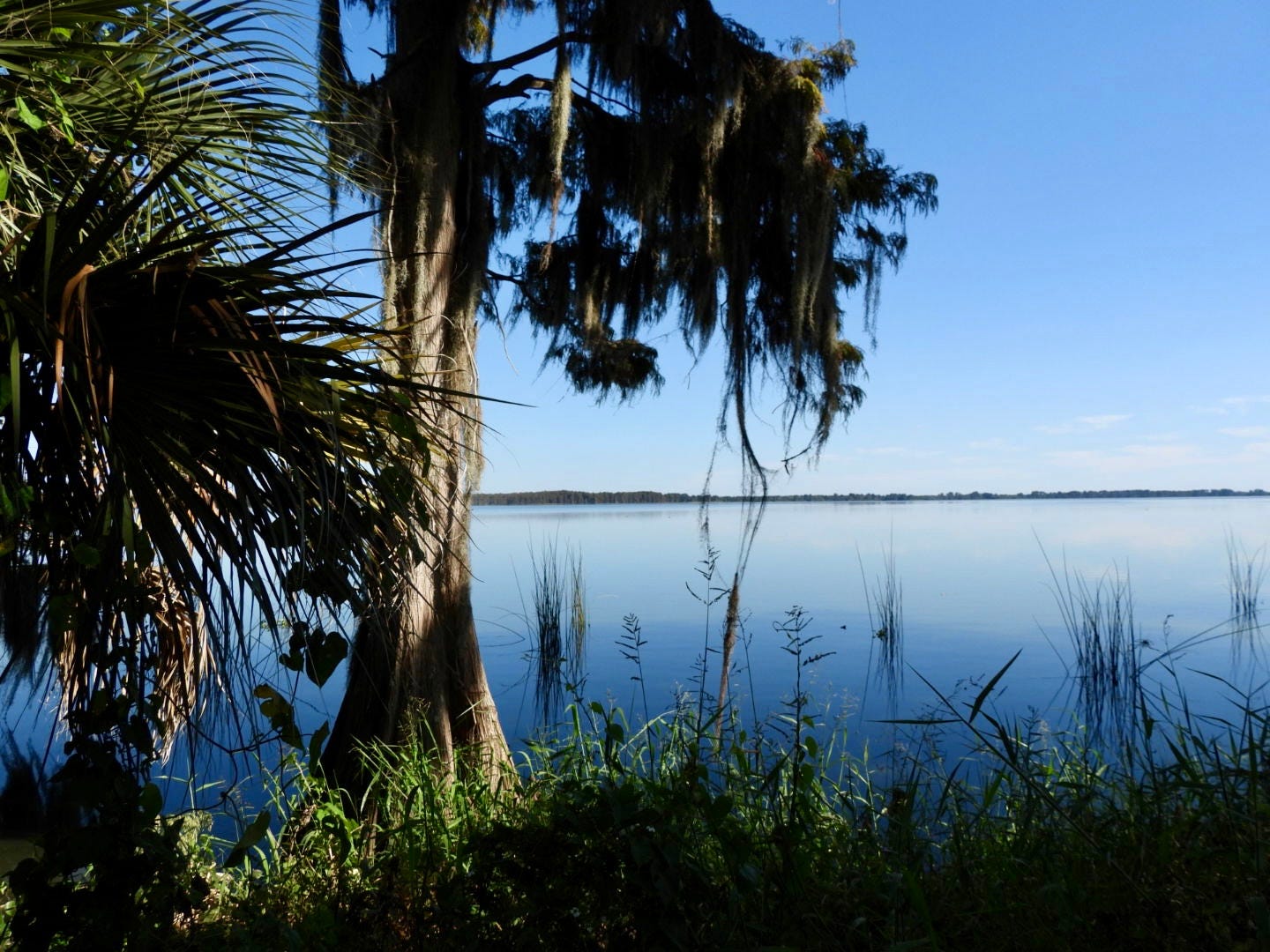
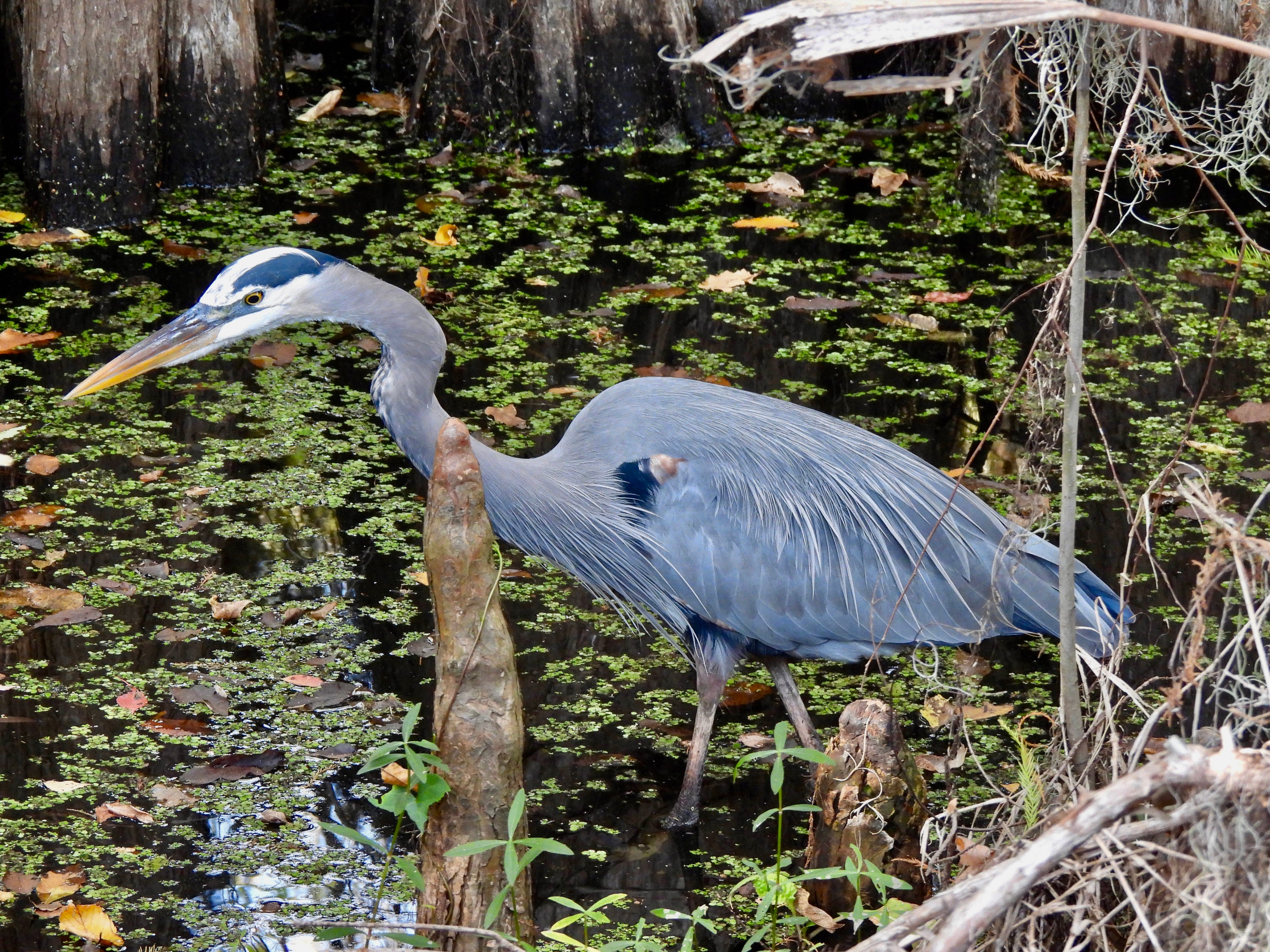
I’m in a swamp again. It’s a liminal place, a threshold between wet and dry. I ostensibly came for marsh and water birds: herons, egrets, gallinules, anhingas, cormorants, ibis—birds that move slowly when hunting so I can learn the settings on my new camera.
Sometimes physical thresholds like swamps reveal the interior ones we need to cross to find our way. We’re drawn to these places by the promise of deeper understanding, even as we try not to get too close to what we need to see.
And so it is with me. Alligators have become talismans for me—creatures that link who I was with who I am becoming.
With a camera I am an observer, selective in what I focus on, able to exclude the things I don’t want to look too deeply at. But alligators are everywhere in a swamp, and once you pay attention to them, they cannot be ignored.
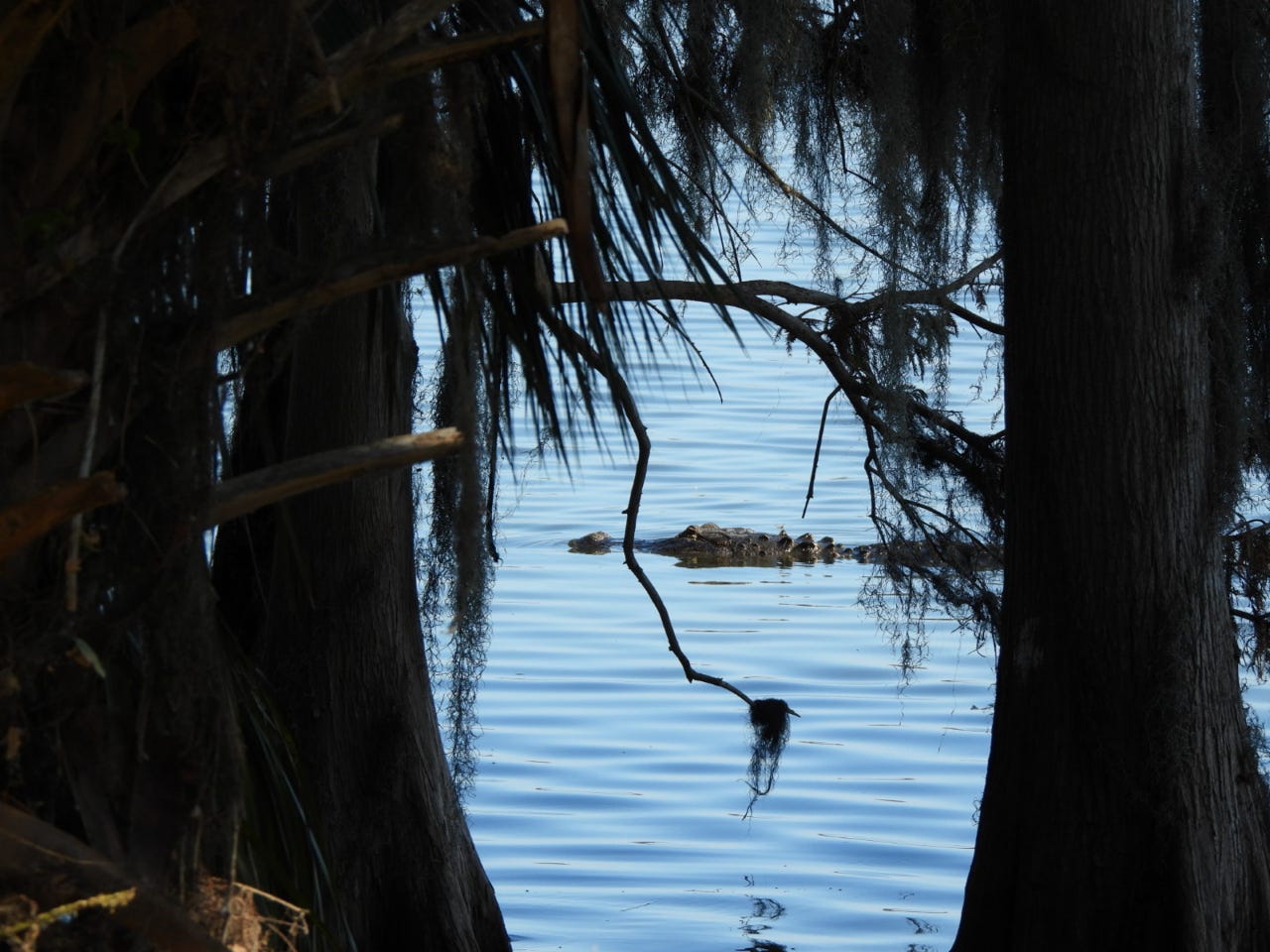
The trail I’m on is called Alligator Alley, and it is well-named. All around me alligators swim in open water, sun themselves by mounds of blooming yellow beggar’s tick, and lie semi-submerged under the cypress.
Tourists, by the sound of their accents, are struggling to see even one alligator, even as they stand less than ten feet away from them.
Maybe it’s because I’m carrying my camera and monopod, or maybe because I’m dressed in what my family calls my “biologist clothes,” quick-dry fabric with lots of pockets, but people keep stopping me to ask, “Have you seen any alligators?”
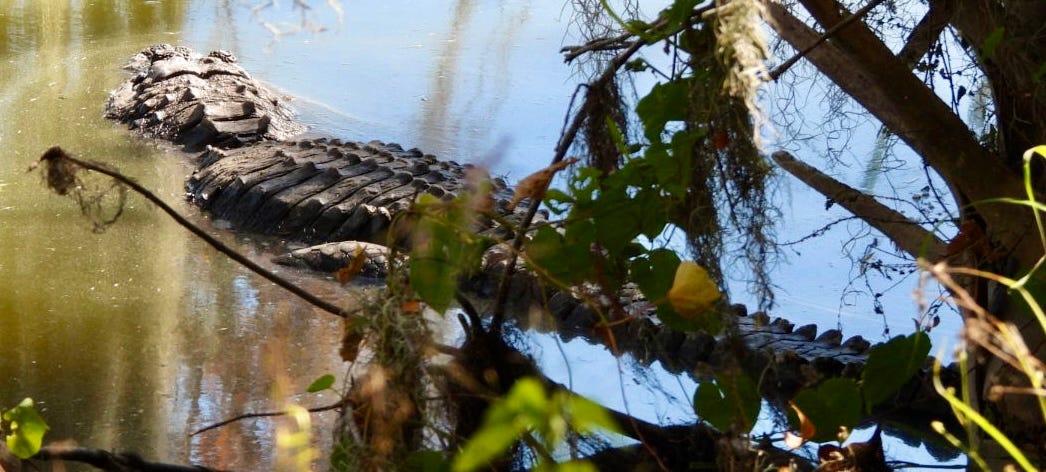
When I point out the nearest reptile, eyebrows lift, grins widen, and deep breaths are taken. Seeing this place through their eyes reminds me what a miracle alligators are. As old as dinosaurs, for eons these leathery creatures have watched the world through unblinking yellow eyes. How much earth wisdom is embedded in their DNA? It’s hard to imagine.
Then a baby alligator, with creamy stripes, tiny orangey eyes and gangly little legs, scrambles across the path in front of me. In the seconds it took to cross the trail and slip into the water, I return to the time and place I learned to see alligators.
Riding along on fishing trips in the swamps and creeks that feed into the Apalachicola River, we would go deep into the backwaters where the cypress and tupelo branches hung close to the water. In those quiet waters, congregations of baby alligators, their stripes bright in the sun, shared logs with snapping turtles. Sometimes our boat would startle them and, in their rush to get away, it looked like they were running on top of the water.
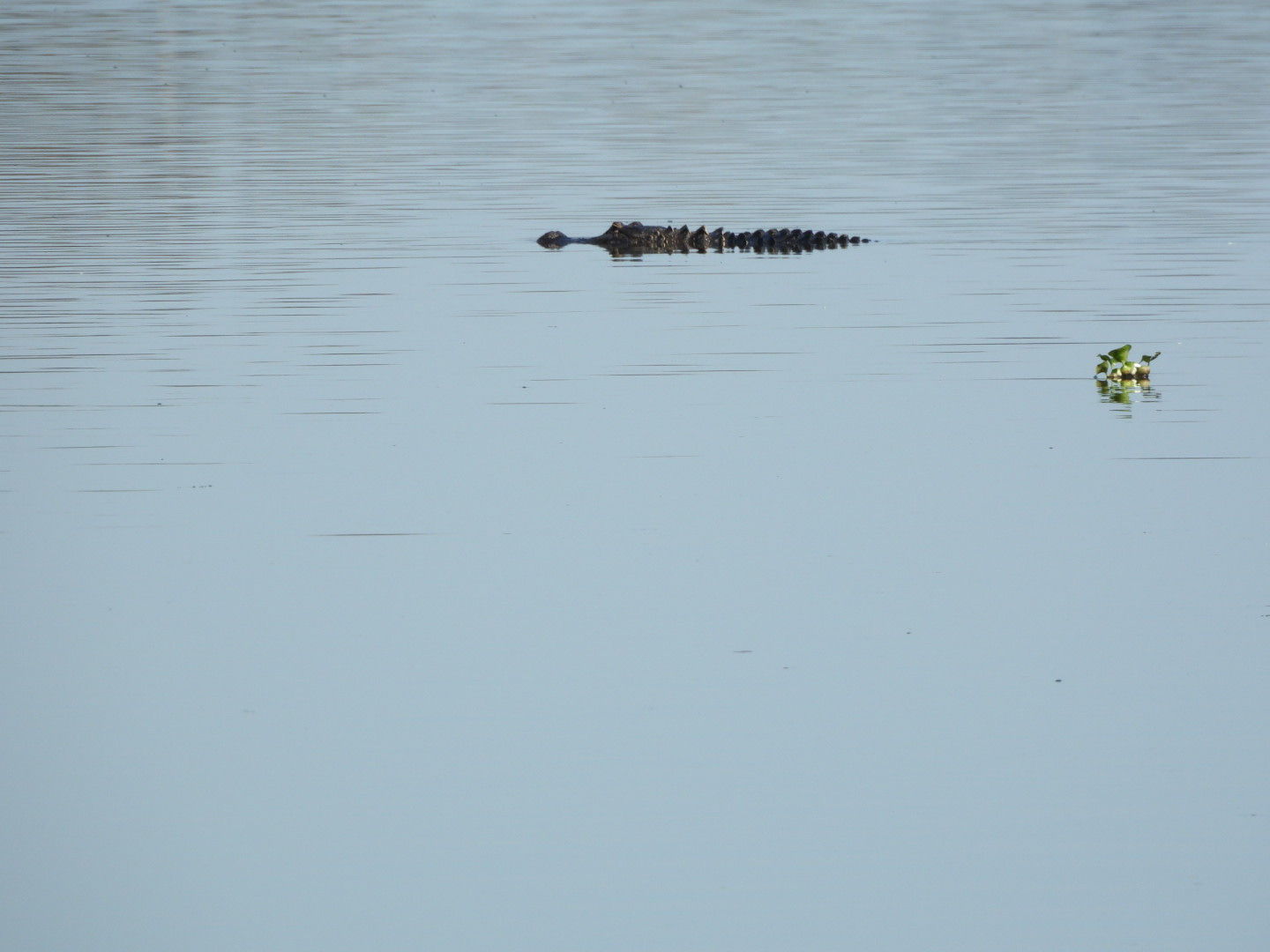
Their antics were delightful, but baby alligators usually have a mother lurking beneath the surface nearby, so keeping watch for the ten-foot parent was also part of the adventure. Since I’m not a fisher, I spent many hours watching the landscape. In time, I learned to recognize the depressions in marsh grass and mud that alligators make as they lay on the shore, and to discern the difference between floating logs and the bumps of their eyes and snout breaking the water as they swim.
These memories are not only of alligators. Many of my formative relationships with family, with now ex-partners and other people early in my adult life required a constant vigilance I couldn’t yet name. I learned to scan for danger, to anticipate reactions, to stay quiet if it might keep the peace.
Watching for alligators mirrored the way I learned to navigate human relationships at the time. Beauty mixed with unpredictability, affection with unease. In those years, I never knew what might break the surface next, or what version of myself I needed to be to stay safe.
Those memories shape the way I see alligators now, tying my past to my present and linking the marshy backwaters of home to the marsh I am standing in today. Researchers who study place memory note that when we return to landscapes that shaped us, they often reactivate the memories we’ve muted or set aside. Familiar environments can surface what we’ve pushed down, sometimes gently, sometimes not.
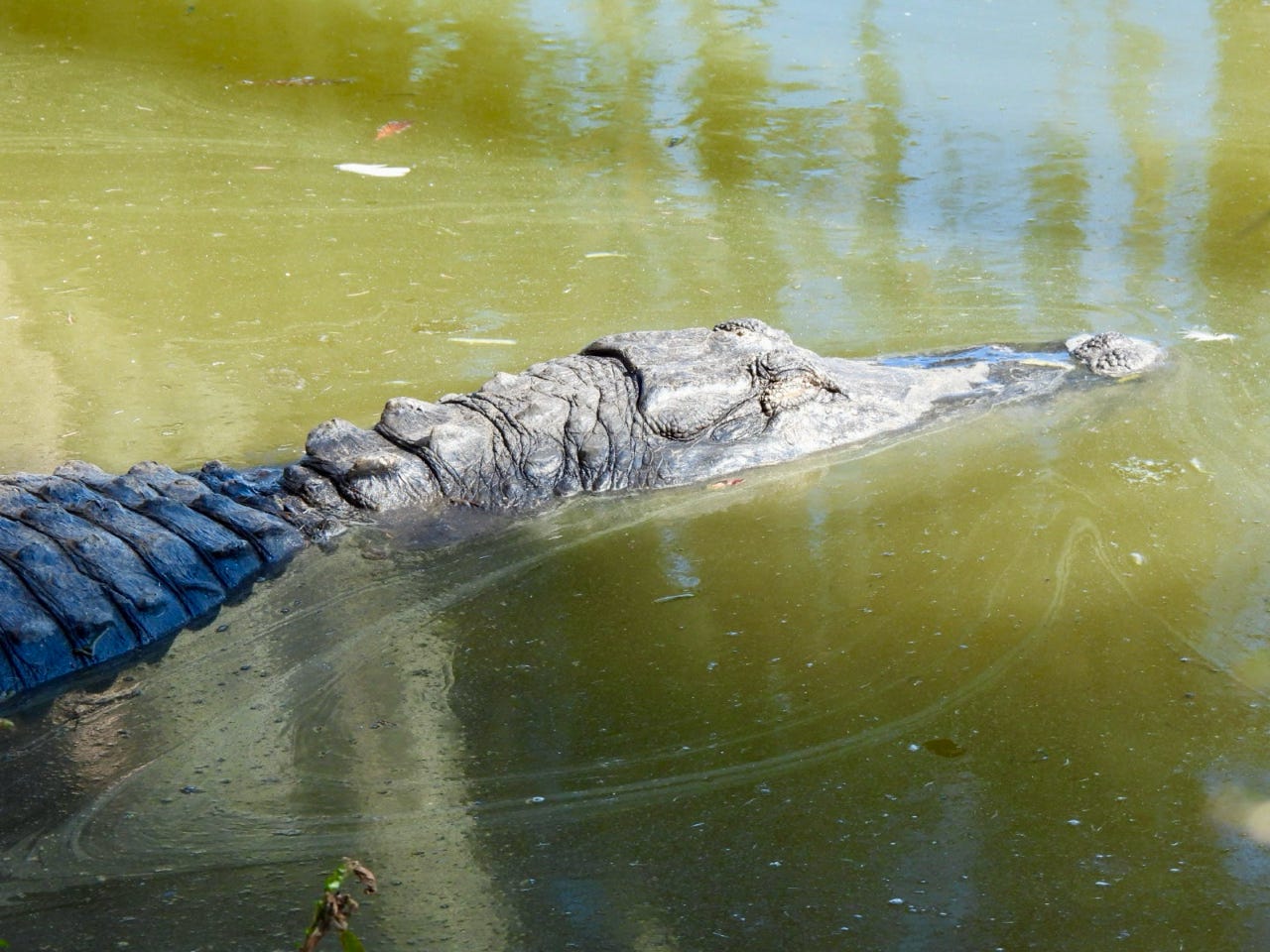
As much as the familiarity of the swamp calls to me, I keep alligators in the background of my consciousness, a kind of self-protection, a way of not looking too closely at what I couldn’t bear to see then and still hesitate to face now.
But I must be careful with the metaphor. Alligators aren’t stand-ins for the people who hurt me, nor symbols of danger themselves. What they evoke is the vigilance I learned early, the constant scanning for what might happen next, no matter what I said or did to avoid making waves. They remind me how much of my life was shaped by reacting, anticipating, and protecting. These animals aren’t my shadow; they simply show me parts of myself I need to make space for. I am both the woman who silently looked for alligators then, and the woman who is now unafraid to show them to people, despite being unable to anticipate their reaction to what I show them.
I am drawn to landscapes that connect my past to my present, and I intuitively know I need to explore the journey I have taken from the waters of the Apalachicola Bay to the places I find myself now.
Before I can find my way home, I need to look directly at the alligators and all they represent: memory, fear, resilience, and the parts of myself I’ve kept submerged. Not because they threaten me now, but because they reveal the places where I once learned to disappear.
Belonging comes from integrating what we’ve tried not to face and recognizing that the whole of who we are has a place in the world. The swamp is a threshold, and I’m still learning how to move through it.
“Belonging comes from integrating what we’ve tried not to face and recognizing that the whole of who we are has a place in the world.”
Beautiful essay, Leigh.