
What It Means to Keep Going Back
Telling the Stories of Places We Love

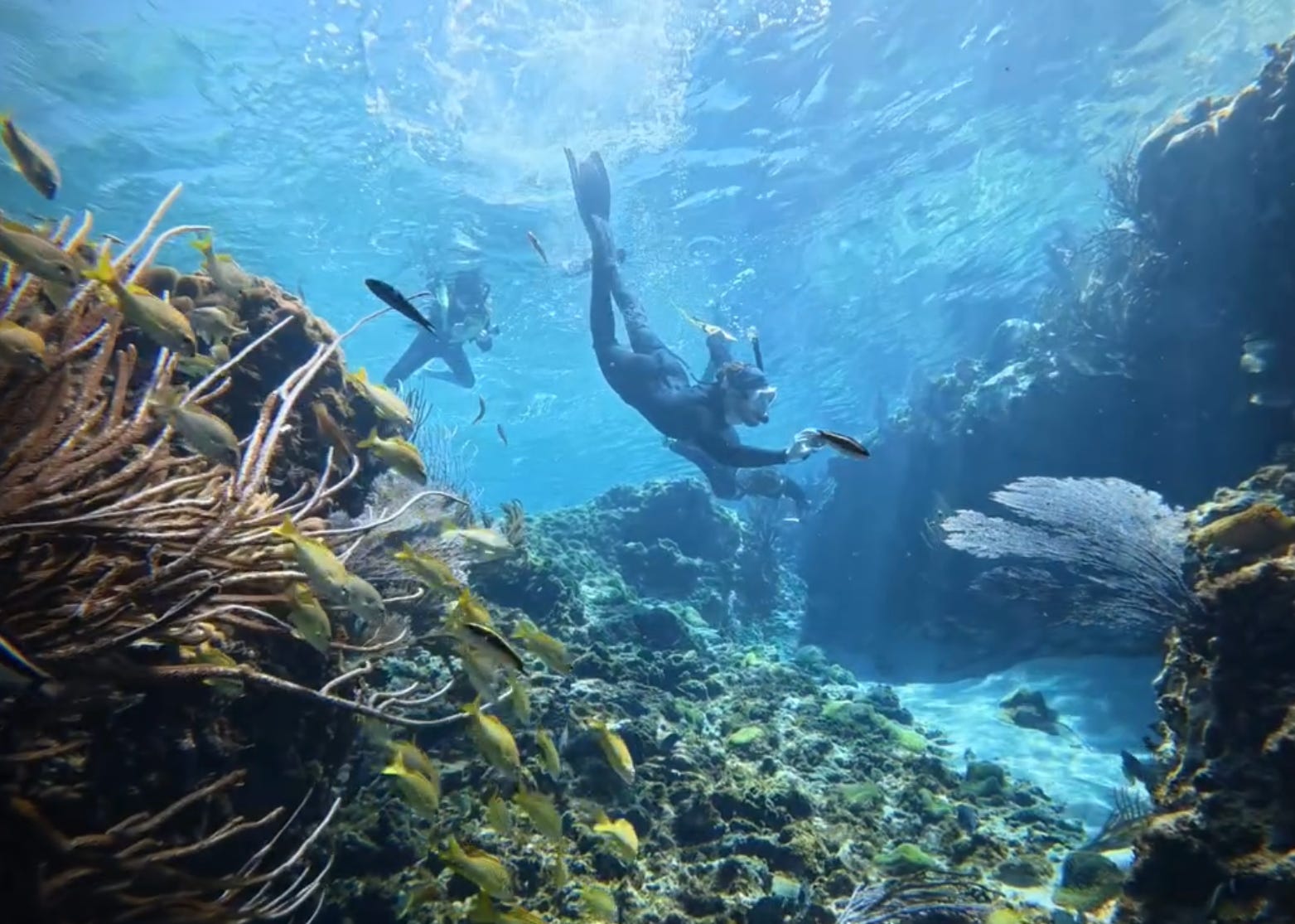
Dave’s Patch Reef sits inside the barrier reef that runs along the Tongue of the Ocean, a fifteen-minute boat ride from Forfar Field Station on Andros Island, Bahamas. It’s shallow enough that students can easily complete snorkel surveys identifying fish but also complex enough to attract bigger species like barracudas, groupers, adult parrotfish and squid.
In the clear water, masses of tiny silversides turn in unison, their scales flashing in the light and contrasting with the bright yellow, red and purple fish grazing below. At least that’s how it used to be. In February when our field course students saw the reef, they were amazed at the numbers of fish - but most of them had never seen a coral reef before.
Having brought students to this place twice before in the last five years, I saw that the reef, bleached multiple times by marine heatwaves and pitted by stony coral tissue loss disease, was crumbling. Dead coral heads coated with orange encrusting algae and colonized by red and purple sponges had replaced vibrant star coral, and coral debris was scattered across the sand like bleached animal bones in a desert. For many of them it was a first glimpse of the vibrancy of tropical waters; for me it was a reminder of how quickly these ecosystems are being lost.
Yet, I keep going back.
Dave’s Patch Reef is part of the classroom at the Forfar Field Station, one of hundreds of biological field stations scattered across the world’s most ecologically significant landscapes. I’ve co-taught a coral reef ecology and geology course there three times now. This spring I also found myself at two other stations — Skukuza Research Station in South Africa’s Kruger National Park and the Southwestern Research Station in Arizona’s Chiricahua Mountains — taking courses rather than teaching. What I didn’t expect was that my time in all three places would reveal the same thing: what it means to keep returning to a place you love that is changing.
Most field stations share a common rhythm: shared meals, close quarters, and the peculiar intimacy of being temporarily disconnected from ordinary life with people who care about the same things you do. In a world that makes it increasingly easy not to look too closely at anything, field station life focuses your attention on where you are.
On my first morning in Skukuza, I emerged from my platform safari tent and discovered that the entire station was enclosed by tall chain link fencing that I hadn’t noticed when I arrived the night before. At breakfast I learned that in this place, people live in enclosures, separated for safety from free roaming lions, hyenas, hippos, giraffes and myriad other creatures. The fence that kept the lions out also kept us in – and in doing so, amplified the effect of living in a field station: we could only focus on our research and the place where we were doing it.
For two weeks I was continuously with the seventeen other people staying at the station, most of whom were also there to teach or learn bioacoustics. We learned together, ate together, and cajoled full-time station residents into taking us on sunrise game drives to seek out all the animals in the park.
We departed brains crammed full of sonograms, recorder settings, and shared memories. Together we saw our first lion, discovered that a camera trap will record the tonsils of a hyena removing it from a tree, and learned that all of us would drop everything to watch a family of giraffe amble by outside the fence.
As students it was all new to us. But our instructors had taught this course at Skukuza three times previously and each year brought their growing children with them. I sensed that like me in Andros, returning to a place they loved meant seeing two things at once: what’s there now, and what used to be.
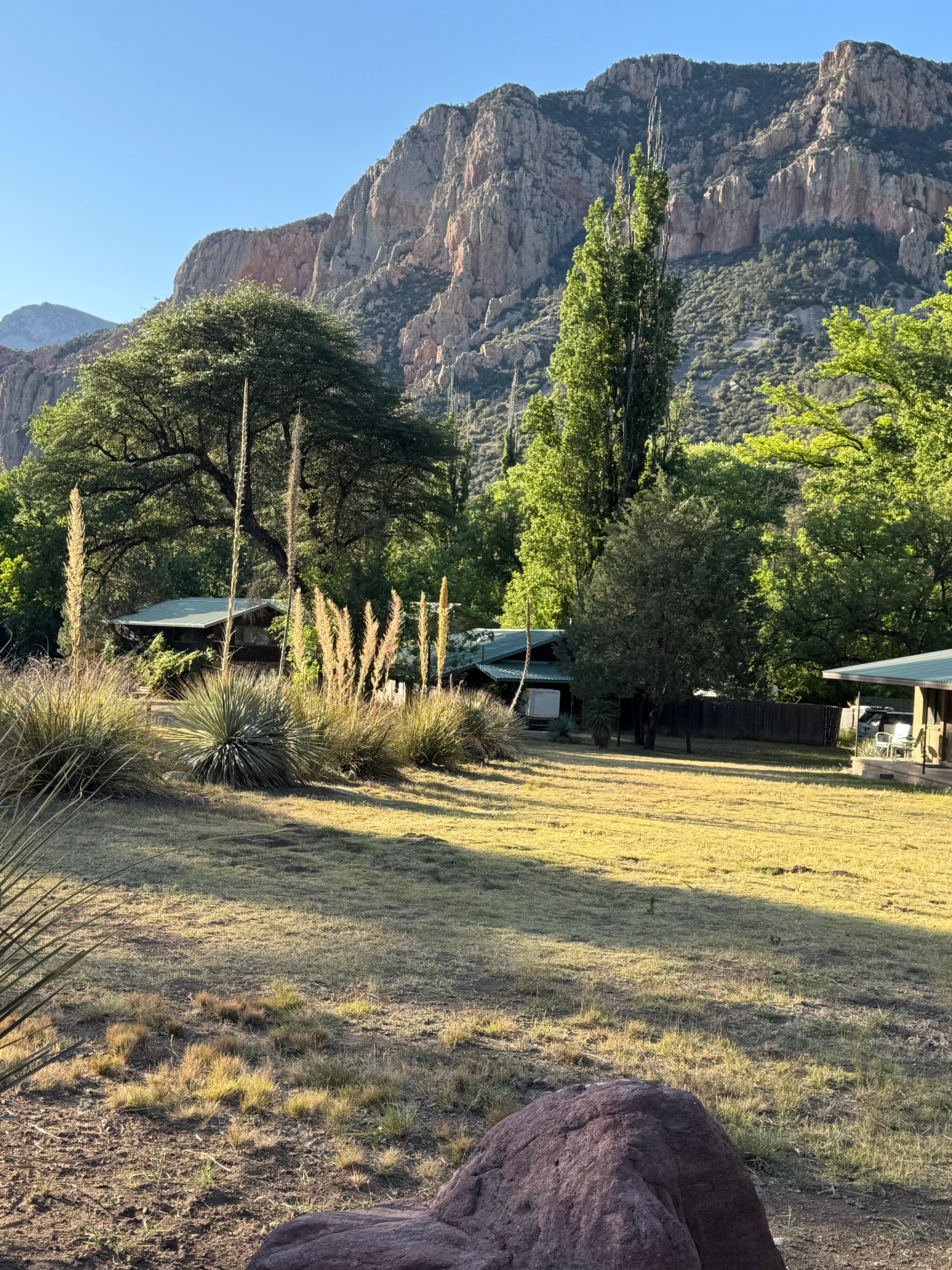
The Chiricahua Mountains are called the Sky Islands because they rise suddenly out of the desert, tall, lush and green in comparison to everything else. To get there, each of us left a paved road, drove out of cell service and spent several hours hoping we would find the station — a series of low-slung mid-century structures nestled in Cave Canyon, surrounded by forest and creeks.
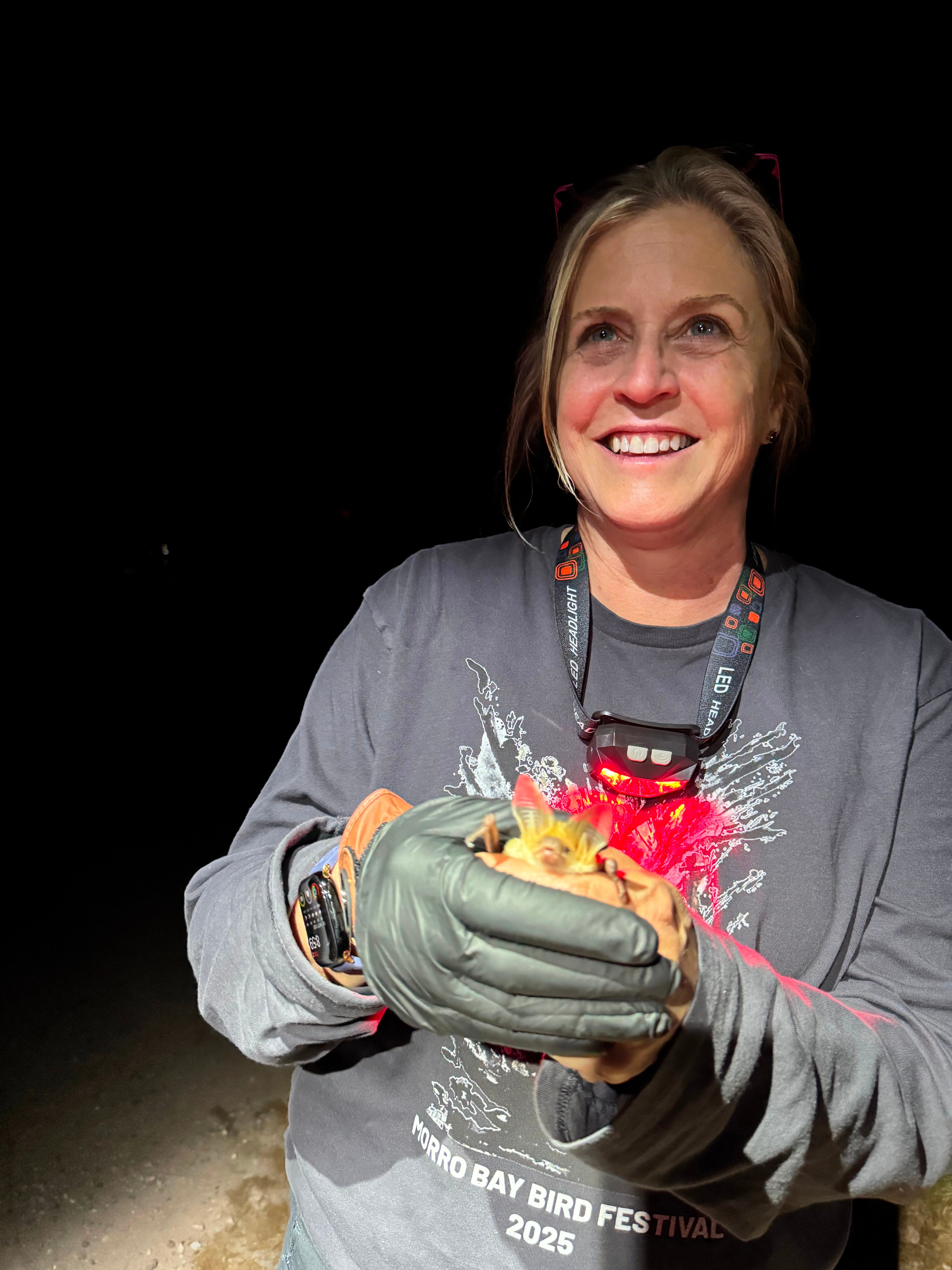
Each day the course schedule began at 7:30am and continued past midnight, which is how 72 hours after arriving I found myself standing ankle-deep in a creek with a headlamp sliding down my forehead, trying to untangle a tiny brown bat with outsized disc shaped ears from a mist net. Intent on defending itself from my inexperienced fumbling, it sank its pinpoint teeth into the soft skin between my pointer finger and thumb. Next to me my classmate, a state park field biologist, cursed under her breath as she felt the same pinch.
The world shrank to the place where I was and the people there experiencing it with me. As a result, when I think about the Chiricahua Mountains, it is as if the place exists exactly as it did in that moment: tall trees, jagged peaks, cold water, shared frustration and excitement.
The Arizona instructors have been teaching this course for nearly thirty years. Thirty years of the same creek beds, the same nets, the same mountains — but not the same bats, not the same forests, not the same sky or the same people.
What drew them back?
Like my observations of the declining reef in Andros, my instructors reported that over time fewer insects have meant fewer bats, and more frequent droughts are putting pressure on the system. Thirty years of watching a system change is a particular kind of knowledge — and a particular kind of grief. Their search for bats created two archives: one of scientific data and the other of memory, belonging and lived experience. My instructors offered me that context, just as I offer it to the students I introduce to Dave’s Patch Reef.
On our last night at Skukuza, all seventeen of us drove to the top of a giant rockface for a celebratory sundowner. We watched the sky turn pink and orange as the sun slipped behind the mountains. In the distance, elephants walked in twos and threes among the trees. I knew I would never be in this place with these people again – and that I would never forget it. I also realized if I did return, Skukuza would not be the same. Neither is Dave’s Patch Reef, each time I go back.
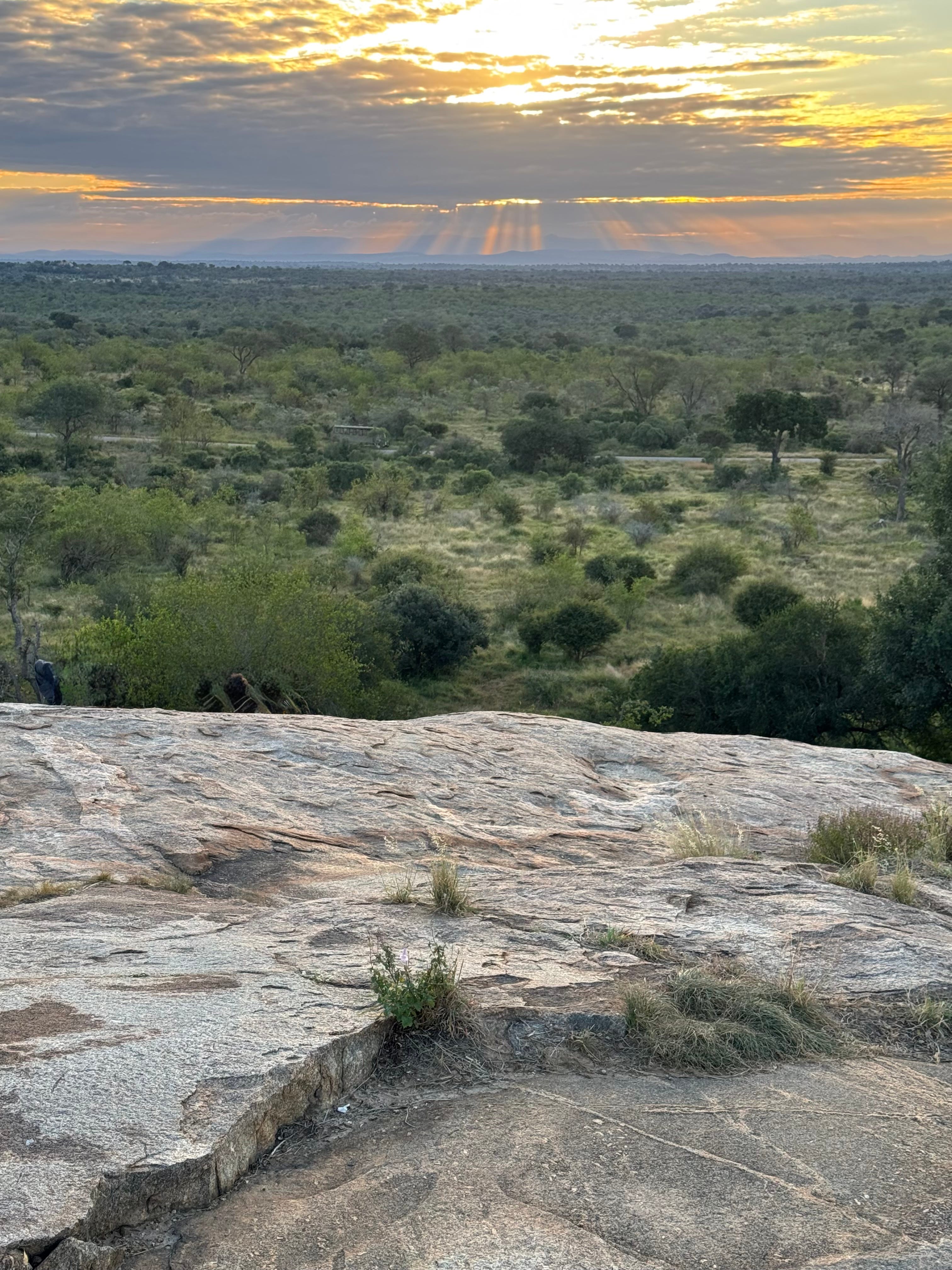
Part of my work is to stand sentinel, creating and holding memories of beautiful places as they are in the moment I see them, all the while anticipating loss. My memories are my baseline, full of the emotions created through shared human experience and my unending awe at the complexity of the world. When I go back, I layer memory over memory — and through that process become able to tell the story of what is happening to people arriving for the first time who don’t yet know what they’re seeing.
Every place is changing, and many places are in decline. The grief of that doesn’t go away — but neither does the pull to return. That’s what drew my instructors back to those creek beds for thirty years. It’s what keeps drawing me back to Dave’s Patch Reef. To witness, to remember, to tell the story of what we are losing — and what is still here.
The only constant is change. But in our minds we see what is, what was and what it may become.